
Rooted in Innovation: A look at simple to use garden tech.
We recognize the dedication of our clients and the innovative devices their hard work brings to life. We invite you to explore these product lines, as these clever solutions may offer significant value to your own needs. Please note that due to confidentiality agreements, we cannot disclose specific brand names or models that are clients may have contributed to. The following article serves as both an overview of these products and a beginner’s guide on how they can assist with the most challenging aspects of the process.
A beginner’s guide for gardening novice to get a helping hand from technology.
A simple and sometimes overlooked risk to any garden is watering. Forgetting or skipping watering in some garden environments could have dire results. Watering on a calendar or timer schedule could yield more favorable results. There are a lot of low cost watering times available on the market today. They are very simple to setup and use. We have put together a short list and outlined some key steps to add this feature to your garden or flowerbed.
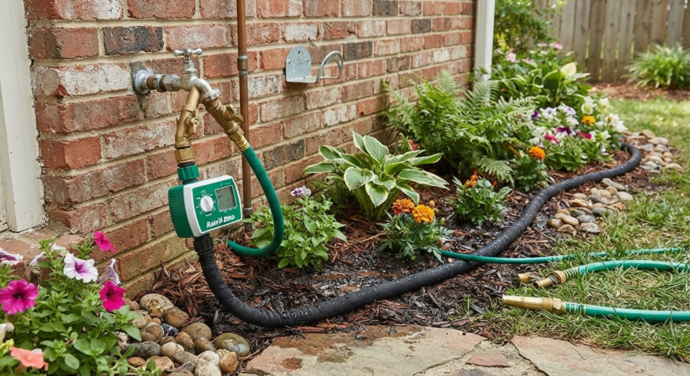
List of items to consider purchasing for this project:
- Teflon tape (Since the water valve on the faucet will be left open you might use this to help create watertight seals around all connections to avoid leaks.)
- A brass splitter or “Y” that includes an on/off switch for each output. (This will allow 2 hose connections on a faucet, this way you do not lose the use of the outdoor faucet. One brass output can be used for daily tasks and one dedicated to the watering timer)
- Consider using a short 6-to-10-foot hose to connect the “Y” splitter to the input of the watering timer; this provides more flexibility in where the timer is placed. Although these timers are rated for outdoor use, I recommend placing them under some form of cover, even a simple wooden box or plastic planter bucket to protect them from sun and rain, which will extend their lifespan. Additionally, remember to remove the batteries at the end of the watering season to prevent battery leaks from corroding critical components over the winter.
- The watering timer. Shop around, they come with a wide variety of features. From the very basic timer that usually also includes days of the week and a simple one button watering delay for expected rain to others that you can automatically delay watering based on rain detected.
- Pliers – Good pliers or “Channel Lock” type pliers should come in handy for tightening those connections to minimize leaks. Careful not to get too aggressive with the connections to the watering timers, many are made with breakable plastic material and some of their manual’s often advise to hand tighten.
Delegating garden security:
Protecting all the hard work you have invested in your garden can be challenging and frustration often arises when animals are close by.
Inexpensive wireless battery camera:
People often remind me “The more you know the smarter decisions you can make” and I must admit having a camera or two focused on a garden space has taught me more than I care to admit. The things I see caught at night or when I am away would have clearly baffled me without the footage to provide some explanation. Many of our neighbors think cameras are a nifty idea but the perceived expense and complexity are too high a cost of time and effort. But that is not true there are several on the market that overly simplify the entire setup process and costs. Arlo, Geeni and Blink offer 2 outdoor camera kits that come with 2 wireless camera’s and the sync module for around a $100 and the cameras connect to your Wi-Fi and many run on lithium double AA batteries, so no need to run cables for power or signal. They even offer a solar powered version for a few bucks more. They include motion activation and night vision for those middle of the night raids on your garden. You can even set them up to give you an alert on your smartphone when the action starts. Once I let a neighbor watch how easy it was for me to setup they were deploying them around their own house and helping other neighbors. The steps are pretty simple, take a camera out of the box, scan its QR code, give it a name and it was ready for use. The batteries last about 2 years under normal use and there are several comparable brands and models so shop around and find which fits you best.
Motion activated garden deterrent:
If camera’s sound a bit too complex for your speed perhaps a motion sensing dancing Santa’s or other motion activate garden deterrent. There are many products to choose from in this category. I know of at least one manufacture that offers a motion activated animal repellent water sprinkler that is solar powered.
Robotic weeding staff:
Aside from unwanted animals roaming around your property at night there remains another threat and it often seems to grow silently overnight, sometimes in just one night! Not to worry, companies are offering commercial farm grade equipment for this problem and over time it seems they keep making them better and smaller. I believe there will be some reliable residential products on the market soon if not already. Weeding robots are evolving and quickly becoming a clever solution to some of the fastest growing weeds around. Engineers are working to bring an array of weed killing methods to these products including careful chemical micro-application, blades that are designed to lift and cut, electric shock and even lasers!
Garden soil issue detection:
You can often identify soil issues by observing plant symptoms such as stunted growth, yellowing leaves, or poor fruit production, which typically suggest nutrient deficiencies or pH imbalances. However, a soil test provides the confirmation needed to pinpoint specific problems, such as low levels of nitrogen, phosphorus, or potassium. Keeping a tester on hand can give you the competitive edge needed to take home a blue ribbon at your next neighborhood garden pageant. Some of these devices even offer additional features, including measuring sunlight and humidity sensors, alongside their built-in soil analysis functions.
Staff votes top picks and summary:
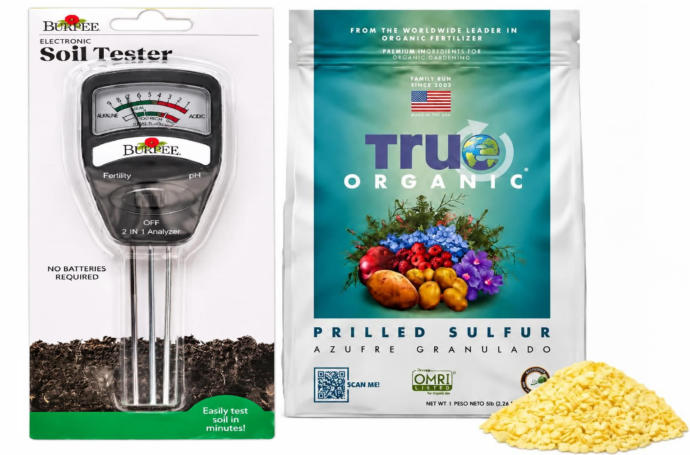
We thought the most helpful gardening tech tool is the soil tester. Most soil tests are easy to read, but our group favored this one made by Burpee. Many fruits and vegetables grow best in slightly acidic soil. For the foods we grow, most of us aim for a pH of about 6.3, since 5 can be too acidic for some plants. To lower the pH gradually, you can scatter prilled sulfur on the soil a few times a year and work it in during spring tilling. Below we will post a few images and a pH chart that we refer to regularly and find helpful for use with the soil tester.
Whether you are tending to a few raised beds or managing thousands of acres, the goal remains the same: fostering healthy, vibrant growth. While our clients specialize in creating mostly commercial grade solutions for larger scale agriculture, that same commitment to professional quality is what allows home gardeners to achieve truly exceptional results. Thank you for spending your time with us, and we hope you found these insights helpful for your own garden.